HISTORICAL PIGMENT ARCHITECTURE
1960s Hoechst Heterocyclic Chemistry & The Benzimidazolone Breakthrough
The invention of the benzimidazolone pigment class in the early 1960s by chemists at Hoechst AG marked a monumental breakthrough in organic color science. While traditional monoazo pigments offered intense chroma, they occasionally suffered from solvent bleeding and moderate lightfastness in thin tints. Hoechst researchers overcame this by integrating a benzimidazolone heterocyclic ring into the monoazo chromophore.
Designated commercially as Benzimidazolone Yellow H4G (Color Index PY151), this newly synthesized compound provided an unprecedented combination: the vivid, clean primary yellow hue of organic azo dyes combined with the indestructible weatherfastness and light stability of high-grade mineral oxides.
Adopted initially for high-end automotive finishes and exterior architectural coatings requiring decades of solar exposure, PY151 was soon embraced by fine art manufacturers. In the modern atelier, it is celebrated as an archival, non-toxic primary yellow of absolute museum permanence.
CHEMICAL SPECIFICATION & OPTICAL DATA
Benzimidazolone Ring Physics, Hydrogen-Bonded Tapes & Optics
Chemically formulated as C₁₈H₁₅N₅O₅, PY151 consists of a monoazo unit coupled to a 5-acetoacetylaminobenzimidazolone group. In the crystalline state, the benzimidazolone rings form extensive intermolecular hydrogen-bonded 'tapes' connecting carbonyl oxygens and heterocyclic amine protons, creating a rigid three-dimensional crystal lattice.
Spectrophotometric reflectance curves demonstrate an exceptionally sharp absorption cutoff at 495nm. Below this threshold, PY151 absorbs virtually all violet and blue light, while reflecting over 90% of incident light across the yellow and red spectrum (520–700nm), yielding a clean, brilliant yellow with minimal chroma degradation.
Possessing an absolute ASTM Lightfastness Class I rating, PY151 is entirely immune to ultraviolet degradation, high thermal stress, and atmospheric chemical pollutants. Its fine crystalline morphology produces smooth, semi-opaque washes with high covering power and clean mixing fidelity.
ART HISTORICAL HERITAGE
Art Historical Heritage: Modernist Precision & Color Space Mastery
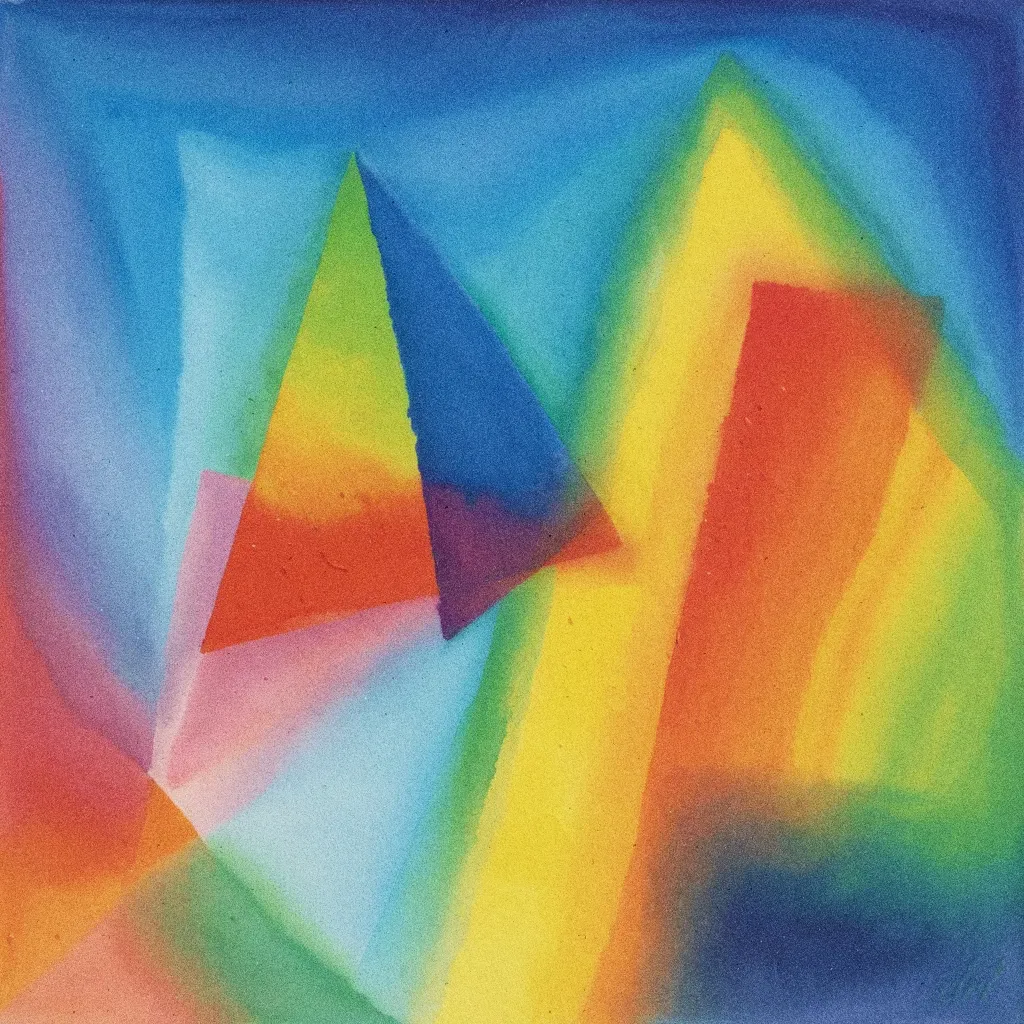
Since its late 20th-century introduction into artists' paints, PY151 has become the primary yellow of choice for geometric abstractionists, hard-edge painters, and precisionist watercolorists. Its unyielding lightfastness and clean chromatic purity allow artists to paint radiant yellow planes that remain pristine over time.
In contemporary color theory, PY151 serves as an ideal primary yellow for split-primary palette systems. Because it leans neither heavily green nor reddish-orange, it mixes clean, vibrant greens with phthalo blues and luminous oranges with quinacridone reds without introducing muddying secondary undertones.
Modern botanical illustrators and scientific colorists rely on PY151 to render high-chroma floral elements and daylight illumination, valuing its permanent archival durability in delicate watercolor washes.
STUDIO CRAFT & MATERIAL PRACTICE
Atelier Practice: Saturated Washes & Paraffin Resist Architecture
In the Coloartura studio in Ermelo, Azo Yellow Benzimidazolone (PY151) is milled into concentrated watercolor washes and applied over 300gsm cold-pressed cotton paper. Its non-granulating, uniform particle dispersion creates flat, saturated planes of pure solar yellow.
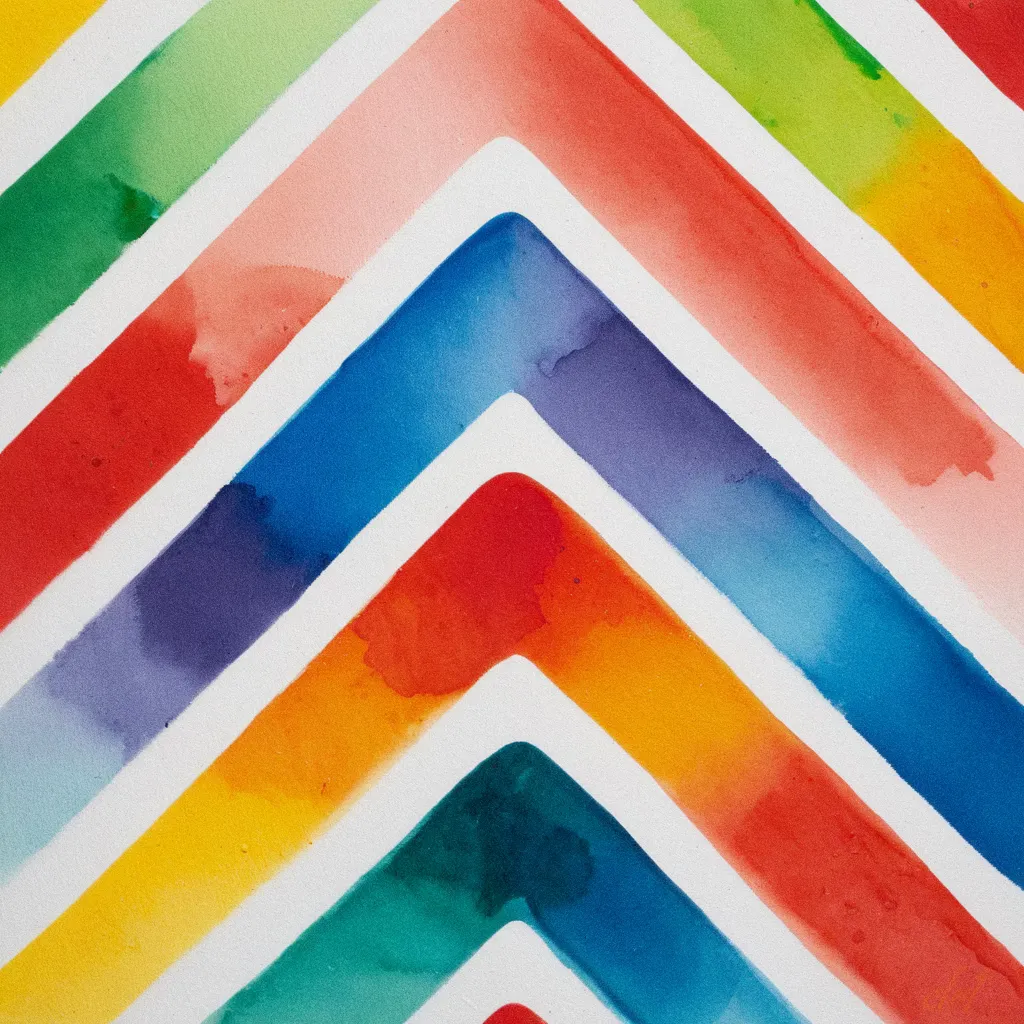
When washed against hydrophobic wax crayon resist lines, PY151 pools cleanly along the paraffin borders, forming crisp geometric boundaries with high visual tension. The brilliant yellow light reflecting through the pigment film creates a luminous dialogue with Coloartura's 1:1 square museum compositions.