HISTORICAL PIGMENT ARCHITECTURE
Disazo Condensation Chemistry & Post-War Color Technology
Diarylide Yellow HR (Color Index PY83) was developed in the mid-20th century by German chemical researchers at Hoechst AG as part of a major initiative to enhance the thermal and photochemical resistance of disazo pigments. While early monoazo Hansa yellows suffered from bleeding and moderate lightfastness in thin glazes, the diarylide condensation structure introduced unprecedented molecular weight and crystal stability.
Originally synthesized for demanding industrial applications including high-grade printing inks, plastics, and automotive finishes, PY83 was quickly recognized by fine art manufacturers for its rich, warm reddish-yellow chromaticity. It offered a non-toxic alternative to Cadmium Yellow Deep (PY37) with superior transparency for glazing.
In contemporary fine art practice, PY83 is celebrated as one of the most reliable warm yellows available. Its rich golden-amber undertone provides an ideal vehicle for depicting warm solar illumination, autumn landscapes, and glowing flesh undertones.
CHEMICAL SPECIFICATION & OPTICAL DATA
Disazo Molecular Architecture, Absorption Edge & Refractive Physics
The chemical structure of PY83 (C₃₆H₃₂Cl₄N₆O₈) features a symmetrical diarylide backbone containing two coupled azo (-N=N-) linkages substituted with four chlorine atoms and methoxy/acetanilide groups. This bulky organic architecture enforces planar alignment and strong intermolecular forces within the crystal lattice.
Spectrophotometric reflectance curves demonstrate near-complete light absorption below 490nm (violet and blue spectrum), followed by a steep spectral reflectance rise across the yellow, orange, and red wavebands (550–700nm). This sharp transition yields its signature deep golden-amber chroma and high color purity.
Carrying an ASTM Lightfastness Class I-II rating in artist-grade formulations, PY83 exhibits high resistance to photochemical fading. Its sub-micron synthetic organic particles produce smooth, semi-transparent washes with intense tinting power and zero physical granulation.
ART HISTORICAL HERITAGE
Art Historical Heritage: Pop Art Silkscreens & Modern Glazing
During the 1960s and 1970s, diarylide pigments played a central role in the explosion of Pop Art and screenprinting. Pioneers such as Andy Warhol and Roy Lichtenstein utilized industrial inks containing PY83 to produce high-impact, saturated golden-yellow surfaces with graphic immediacy.
Contemporary landscape and watercolor painters value PY83 for its glazing transparency. When laid over cool underdrawings or earth pigments, it imparts a golden-hour warmth without the milky opacity of cadmium yellows.
In color-space exploration, PY83 acts as an anchor for warm palettes, bridging the divide between radiant lemon yellows and fiery pyrrole reds with smooth chromatic gradations.
STUDIO CRAFT & MATERIAL PRACTICE
Atelier Practice: Saturated Amber Washes & Wax Resist Boundaries
In Coloartura's atelier in Ermelo, Diarylide Yellow HR (PY83) is milled into concentrated watercolor washes and applied over 300gsm cold-pressed cotton paper. Its non-granulating, high-staining organic chemistry allows it to form smooth, saturated amber fields across the paper tooth.
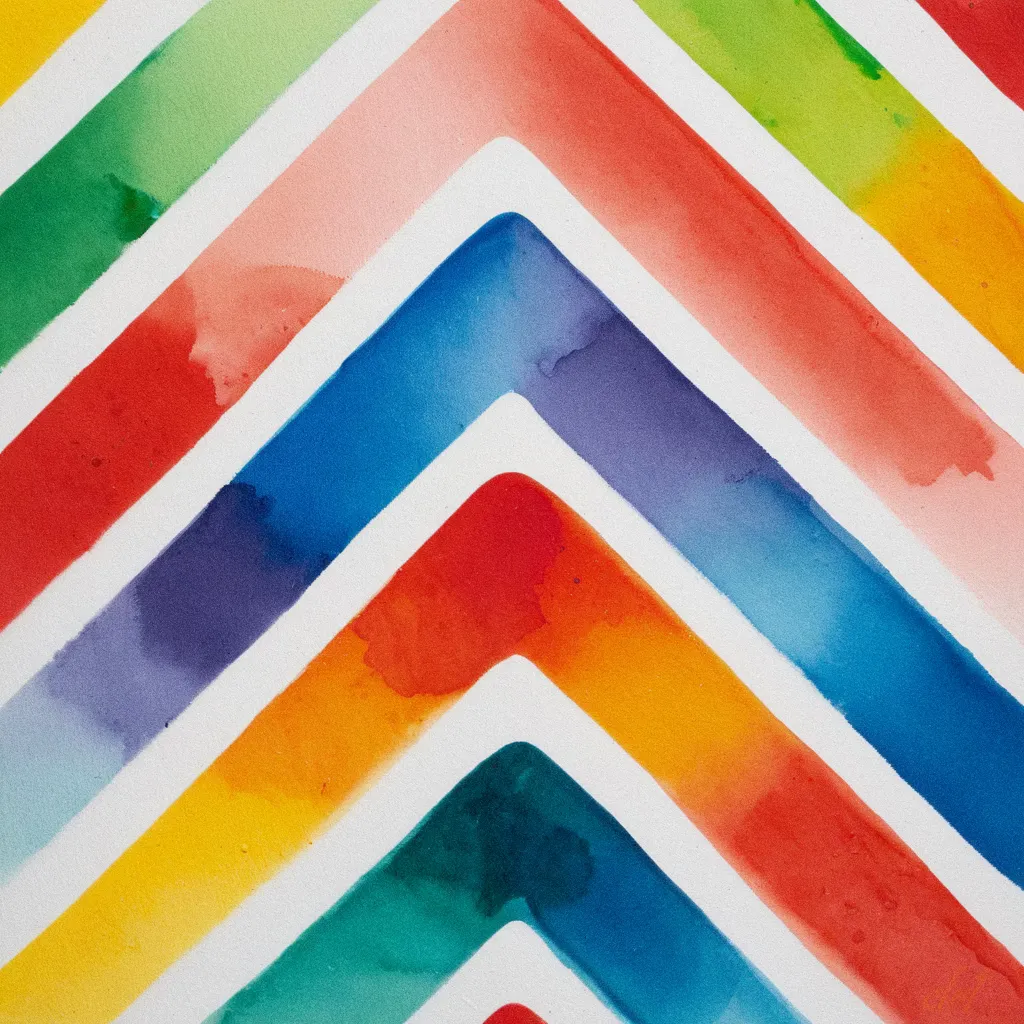
When washed against hydrophobic wax crayon resist lines, PY83 produces clean, sharp geometric edges where the intense amber pigment meets the white wax barriers. This dynamic balance between radiant analog watercolor pooling and rigid geometric containment defines Coloartura's 1:1 museum compositions.