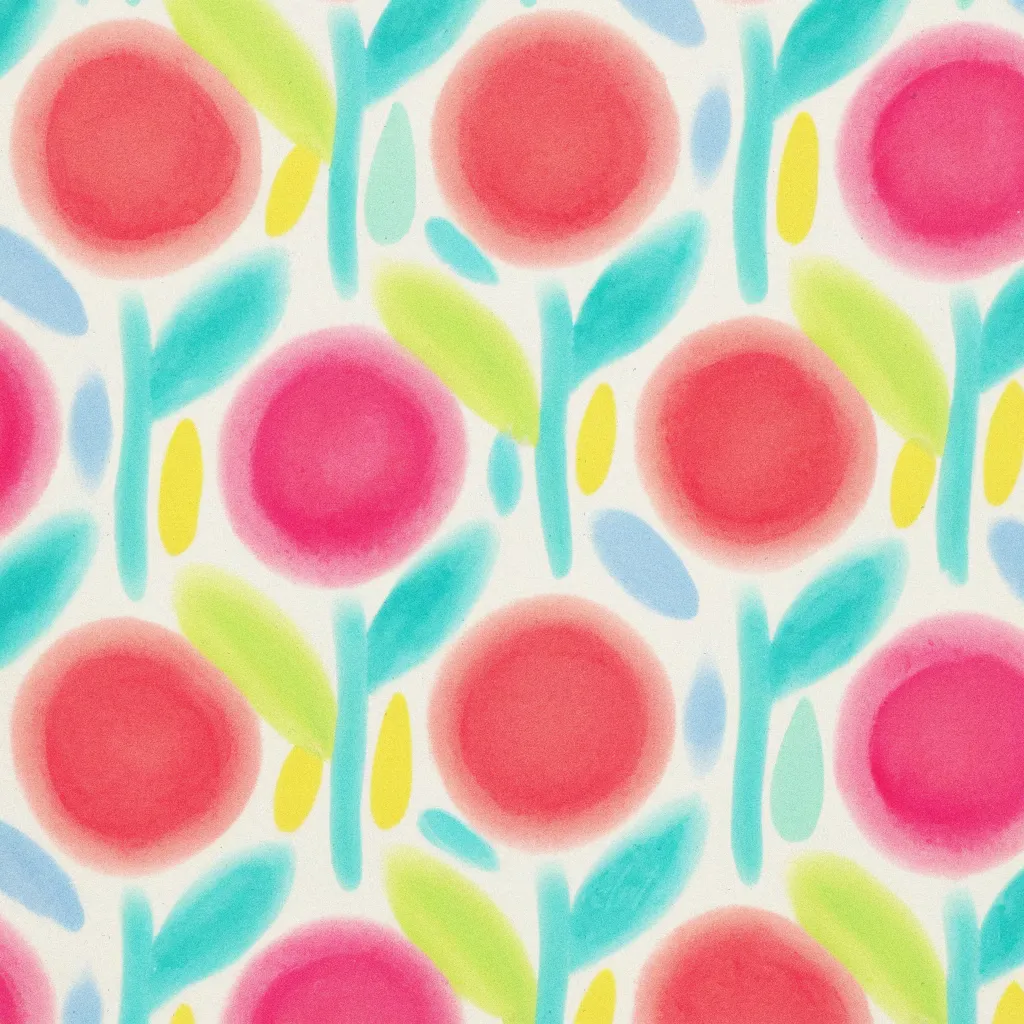
CAT. 133 — Mint Botanica (2025), Ermelo. Autonomous digital artwork from scanned watercolor and wax crayon textures, 1:1 Digital Format (Ultra HD Master).
Mint Botanica
Organic floral harmony pairing vibrant mint turquoise with soft blush rose
Dialogue Between Analog Texture and Digital Precision
Fluid botanical washes of vivid mint turquoise and emerald green bloom into delicate blush rose petals. Fine capillary bleeds replicate natural botanical cellular structures on heavy cold-pressed cotton paper.
In our Ermelo atelier, transparent watercolor washes on heavy cotton rag paper and the tactile tooth resistance of wax crayons were scanned with microscopic precision. In this 1:1 composition, the unique physical attributes of each medium come alive.
"Botanical morphology translated into pure pigment chemistry in the Ermelo laboratory."
Tactile Materiality & Analog Scans
The physical foundation of Mint Botanica relies on the organic friction between fluid watercolor washes, dense wax crayon tooth resistance, and microscopic optical digitisation in our Ermelo studio.
300gsm Cotton Rag Tooth
Deep watercolor pooling forms subtle capillary blooms along the paper grain, capturing natural edge accumulation impossible in purely synthetic vectors.
Wax Crayon Friction
Heavy wax crayon strokes leave micro-fissures and granular tooth fragments that reflect light with physical depth and tactile warmth.
4000px Ultra HD Scan
High-DPI flatbed capture maps every fiber shadow and pigment grain into an uncompressed digital archive master ready for museum printing.
The Palette of Mint Botanica
The specific chromatic components and analog pigment references presented on a pure neutral backdrop for exact visual fidelity.
Cobalt Titanate Green
Dominant vegetal wash and organic botanical foliage
Quinacridone Rose
Delicate petal blooming contours and soft capillary edges
Green Gold Azomethine
Luminous botanical highlights across fresh leaf surfaces
Cadmium Yellow
Central pistil luminescence and radiant morning light
Frequently Asked Questions about Mint Botanica
Read about the technique, Ermelo studio origin, mineral pigments, and autonomous digital master status of Mint Botanica.
What natural imagery inspires Mint Botanica (CAT. 133)?
Mint Botanica is inspired by springtime botanical blossoms, unfurling leaves, and fresh morning dew on organic foliage.
How are the botanical textures achieved in Mint Botanica?
Mint Botanica utilizes wet-in-wet watercolor capillary pooling combined with wax resist outlines crafted by hand in Ermelo.
Which four vivid pigments characterize Mint Botanica?
Mint Botanica is characterized by mint turquoise (PG50), blush rose pink (PR122), citron lime (PY129), and solar saffron (PY35).
Why is Mint Botanica assigned to Room I: Origin?
Mint Botanica is assigned to Room I: Origin because it represents the primal organic emergence of natural color harmonies.
What resolution was used to capture Mint Botanica?
The original watercolor elements of Mint Botanica were captured at microscopic ultra-high resolution to preserve every paper fiber and drying ring.
Request Information Regarding Mint Botanica
Would you like to learn more about digital licensing, exhibition rights, or the digital master file of Mint Botanica (CAT. 133)?