HISTORICAL PIGMENT ARCHITECTURE
The Late 1930s Chlorination Triumph & IG Farben Synthesis
Following the sensational 1935 introduction of copper phthalocyanine blue (Monastral Blue), industrial chemists in Germany (IG Farben) and Britain (ICI) sought to modify the macrocyclic ring to access the green portion of the spectrum.
Between 1935 and 1938, chemists discovered that exhaustively chlorinating the copper phthalocyanine molecule—substituting 14 to 16 hydrogen atoms on the outer benzene rings with chlorine atoms—dramatically shifted the electronic absorption bands into the red-yellow spectrum.
Commercialized as 'Monastral Green' (Color Index PG7), this revolutionary pigment replaced fugitive vegetable greens and arsenic-based emeralds with an archival, non-toxic organic compound of unprecedented tinting intensity.
CHEMICAL SPECIFICATION & OPTICAL DATA
Polychlorinated Macrocyclic Orbital Physics & Spectral Absorption
Phthalo Green (Color Index PG7) is chemically formulated as polychloro copper phthalocyanine (C₃₂H₃Cl₁₃CuN∯ to C₃₂Cl₁₆CuN∯). The introduction of electronegative chlorine atoms contracts the electron density of the 18-electron aromatic pi-conjugated macrocycle, shifting the molecular orbital HOMO-LUMO bandgap.
This shift results in near-total absorption of long-wave red and orange photons (600–720 nm) and ultraviolet wavelengths, while transmitting a crisp, cool emerald-green waveband centered at 500–520 nm. The molecule possesses a staggering molar extinction coefficient, giving PG7 the highest tinting power of any green pigment.
Rated ASTM Lightfastness Class I, PG7 is utterly impervious to UV radiation, atmospheric oxidation, strong acids, and heat up to 400°C. In watercolor vehicles, it functions as a non-granulating, deeply penetrating transparent stain.
ART HISTORICAL HERITAGE
Post-War Art Heritage: From Modernist Abstraction to Graphic Art
The extreme purity and tinting intensity of Phthalo Green transformed post-war painting. Abstract Expressionists and Color Field masters used its deep transparent washes to build bottomless, luminous layers of green space on raw canvas.
Pop artists such as Roy Lichtenstein and Andy Warhol embraced PG7 for its intense graphic energy and crisp printing performance in mass-culture silkscreens.
Phthalo Green represents the pinnacle of modern synthetic color: cool, pristine, surgically precise, and infinitely deep.
STUDIO CRAFT & MATERIAL PRACTICE
Atelier Execution: Transparent Staining & Wax Resist Precision
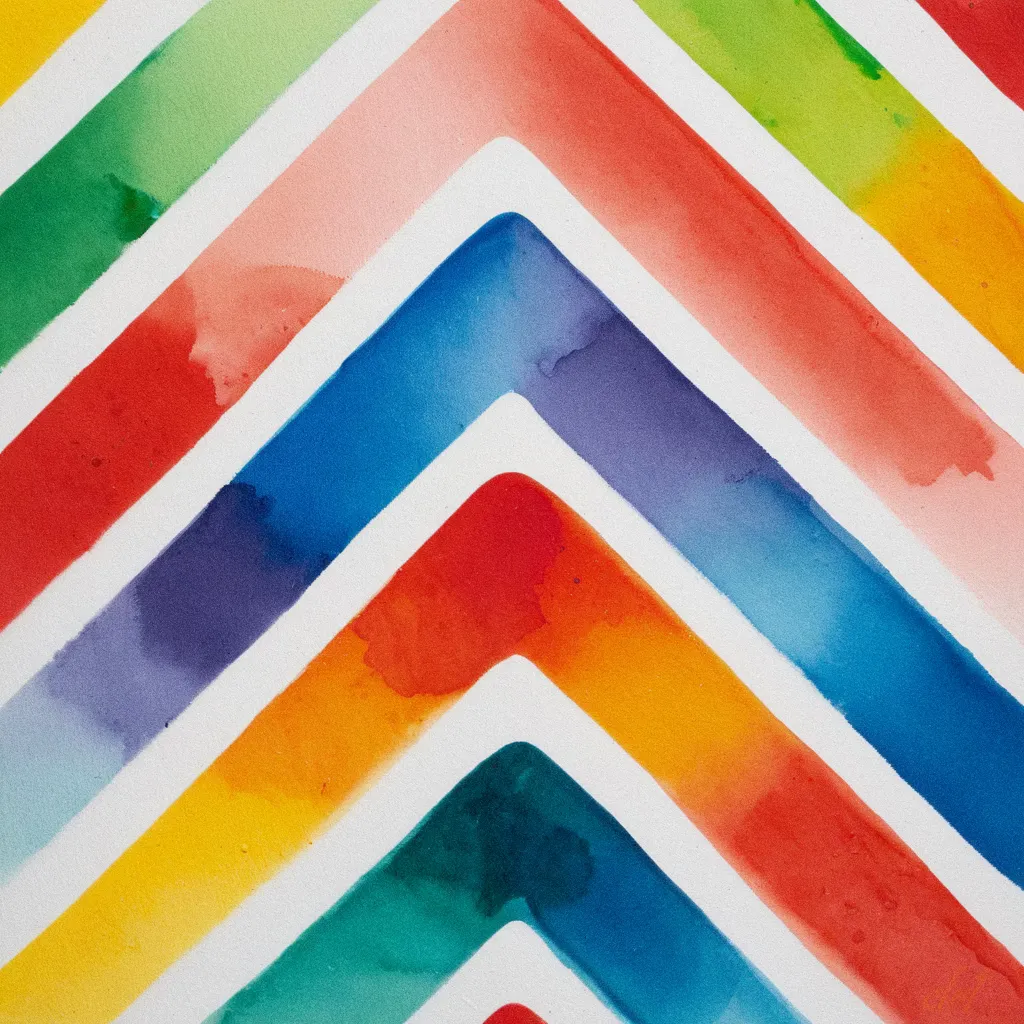
In the Coloartura studio in Ermelo, pure Phthalo Green PG7 is prepared in micro-diluted watercolor glazes on 300gsm cold-pressed cotton rag paper.
Because a mere droplet of PG7 exerts colossal tinting power, it creates a glass-like emerald veil across the cotton paper fibers without sedimenting. When meeting hydrophobic wax crayon resist barriers, it produces a razor-sharp meniscus that defines high-contrast geometric divisions in Coloartura's 1:1 masterworks.