HISTORICAL PIGMENT ARCHITECTURE
Halogenation Innovation & The Evolution of Phthalocyanines
The development of Phthalo Green Yellow Shade (Color Index PG36) represents a milestone in synthetic organic pigment chemistry. Following the 1930s introduction of blue copper phthalocyanine (PB15) and chlorinated blue-shade green (PG7), chemical engineers at BASF and Imperial Chemical Industries sought to push the phthalocyanine chromophore toward the warmer yellow-green spectrum.
By substituting multiple peripheral hydrogen atoms with a precise combination of bromine and chlorine atoms across the macrocyclic ring system, chemists synthesized octabromo-hexachloro copper phthalocyanine in the mid-20th century. The inclusion of heavy bromine atoms altered the crystal field energetics, shifting the transmittance window toward a vivid yellowish green.
Adopted across fine art media, PG36 quickly became a favorite among modern landscape painters and botanical artists. It delivers a glowing, transparent yellow-green that eliminates the need to mix separate blues and yellows, providing a single-pigment formulation of exceptional purity.
CHEMICAL SPECIFICATION & OPTICAL DATA
Brominated Macrocyclic Physics, Absorption Spectra & Staining Power
Chemically formulated as C₃₂H₂Br₈Cl₆CuN∯, PG36 contains a central copper(II) ion sequestered within an extensively halogenated 18-electron aromatic phthalocyanine macrocycle. The presence of eight bulky bromine atoms induces steric distortion and auxochromic shifts in the molecular orbitals, shifting the maximum absorption band into the deep orange-red region.
Spectrophotometrically, PG36 exhibits near-total light absorption between 600nm and 680nm, paired with a massive, luminous transmittance peak centered between 515nm and 535nm. This allows the pigment to transmit an intense, yellow-toned emerald waveband while filtering out warm ambient wavelengths.
Carrying a permanent ASTM Lightfastness Class I rating, PG36 is completely impervious to UV radiation, chemical solvents, acids, and alkalis. Its sub-micron organic particles possess immense tinting strength and staining capability, producing completely transparent, glass-like glazes with zero physical granulation.
ART HISTORICAL HERITAGE
Art Historical Heritage: 20th-Century Botanical Masters & Modern Colorists
Since its introduction into artists' watercolor and acrylic palettes, PG36 has transformed the depiction of sun-drenched foliage, tropical waters, and radiant botanicals. Contemporary botanical artists rely heavily on PG36 to capture the vibrant, backlit translucency of fresh spring leaves and moss.
Abstract expressionists and color-space painters embraced PG36 for its extreme tinting power and optical clarity. Artists such as Helen Frankenthaler and Morris Louis harnessed the fluid, staining properties of modern phthalocyanines to create expansive, glowing fields of translucent color that bonded directly into unprimed canvas fibers.
In modern geometric and hard-edge abstraction, PG36 is celebrated for its ability to maintain intense chromatic saturation even in high-dilution glazes, allowing artists to build complex, luminous color chords.
STUDIO CRAFT & MATERIAL PRACTICE
Atelier Execution: High-Velocity Glazes & Paraffin Wax Resist Lines
In the Coloartura atelier in Ermelo, Phthalo Green Yellow Shade (PG36) is applied as a concentrated watercolor glaze over heavy 300gsm cold-pressed cotton paper. Its non-granulating, high-staining chemistry allows the wash to glide smoothly across the paper surface, bonding instantly with the cotton fibers.
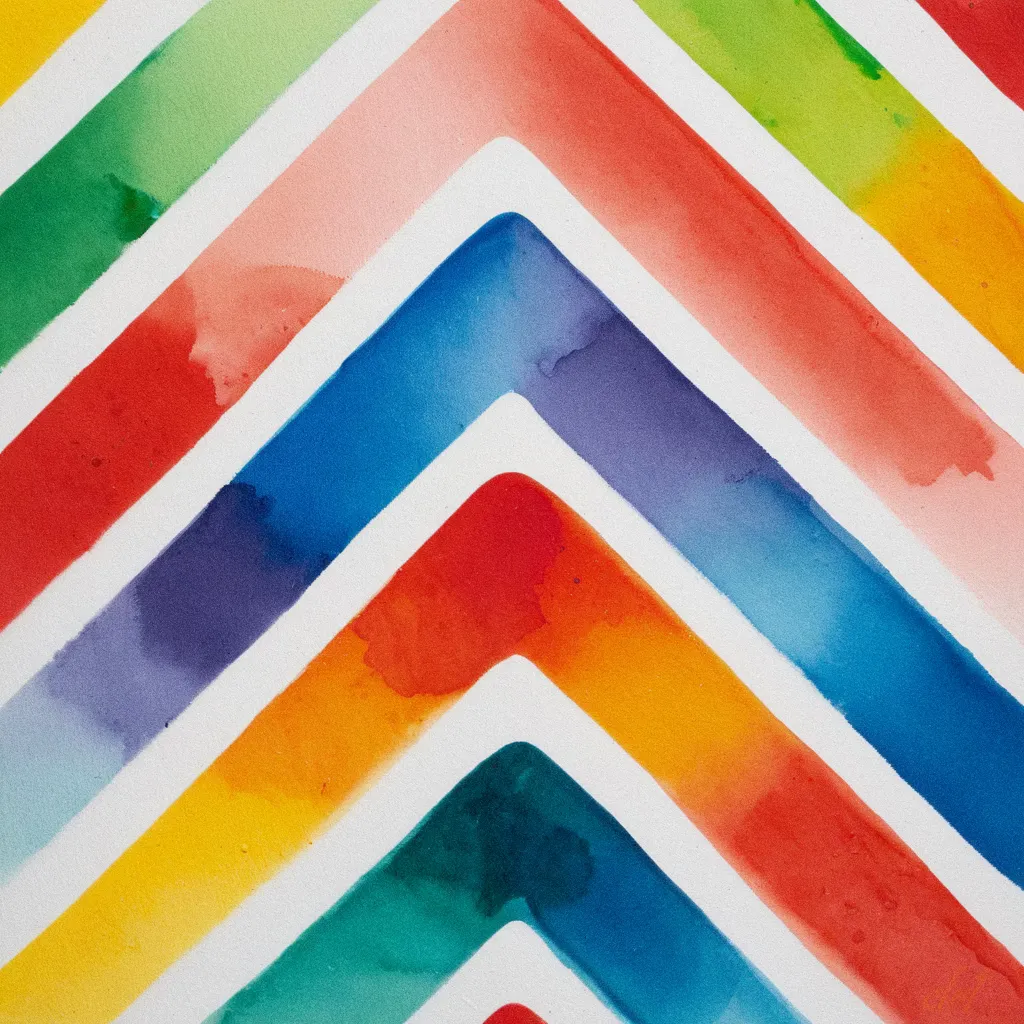
When washed across hydrophobic wax crayon resist lines, PG36 flows around the paraffin barriers, creating razor-sharp linear divides without pigment bleeding. The glowing yellow-green transparency allows the white paper beneath to illuminate the geometric structure of Coloartura's 1:1 masterworks.